

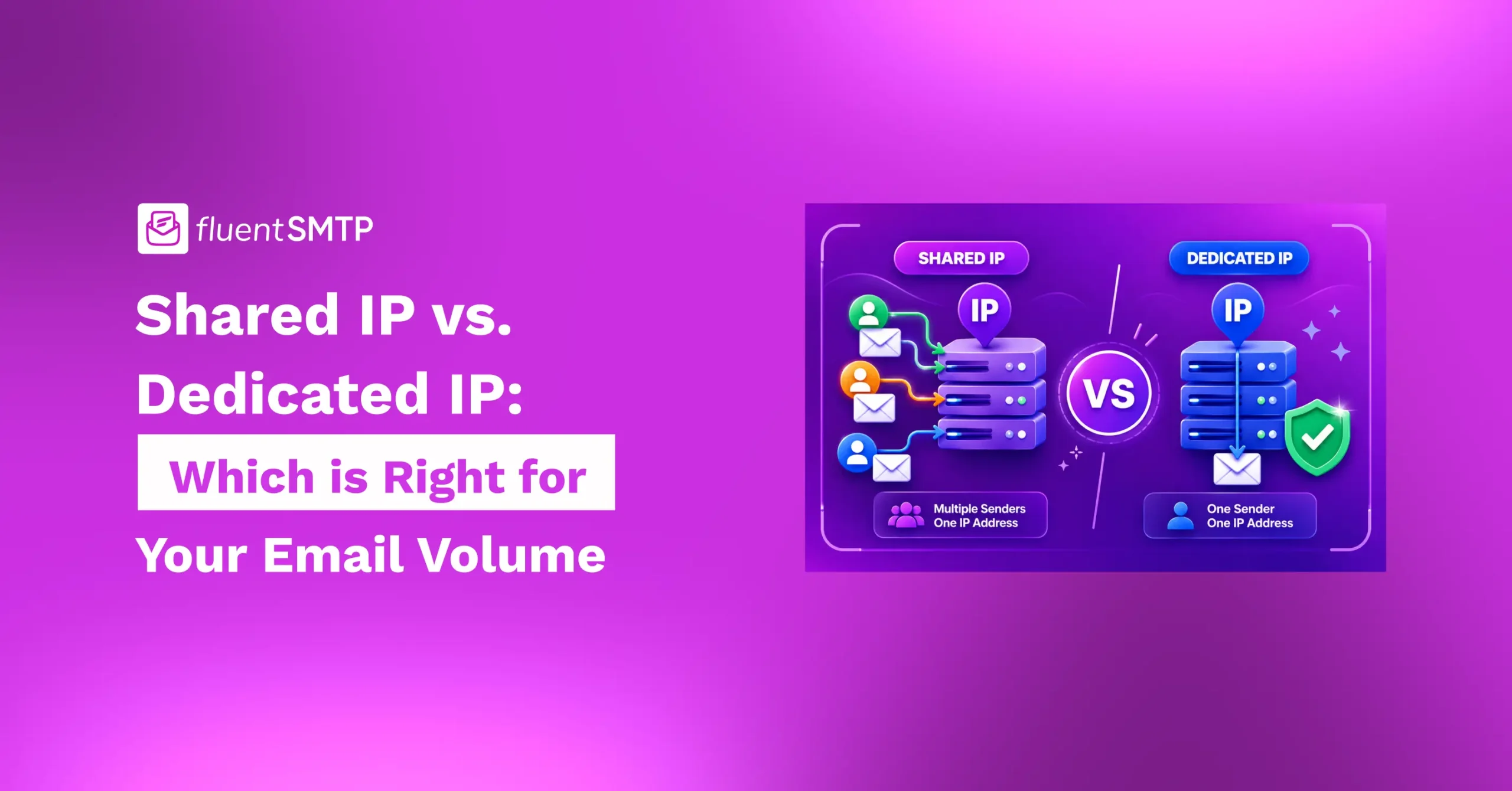
Shared IP vs Dedicated IP: Which Is Right for Your Email Volume?

Email deliverability isn’t just about writing great emails. It starts with the infrastructure behind them. You can create the perfect newsletter or transactional email, but if it never reaches the inbox, your efforts go to waste.
One of the biggest decisions businesses face is choosing between a shared IP and a dedicated IP. Some believe a dedicated IP automatically guarantees better deliverability, while others assume a shared IP is risky because multiple senders use it. In reality, neither assumption is correct.
The best choice depends on how many emails you send, how consistently you send them, and how you manage your sender reputation.
In this guide, we’ll compare shared IP vs dedicated IP, explain the dedicated IP email benefits, discuss when a shared sending IP is the smarter choice, and help you confidently decide which option is right for your business.
What Is a Shared IP?
A shared IP is an IP address that multiple businesses or users use to send emails through the same email service provider. Instead of owning the IP exclusively, everyone in the pool contributes to its overall sending activity.
Think of it like using public transportation. Many people travel on the same route, and the system develops a consistent and trusted pattern over time. Similarly, reputable email providers carefully manage shared IP pools to maintain a healthy sender reputation.
For most small and medium-sized businesses, this arrangement works extremely well because they benefit from an already-established sending history.
Advantages of a Shared IP
Let’s take a look at some of the key advantages of using a shared IP:
- Immediate reputation benefits: A new website doesn’t have to build an IP reputation from scratch. The provider’s shared infrastructure already has established trust with mailbox providers.
- Perfect for low email volumes: Businesses that send occasional newsletters or transactional emails usually don’t generate enough volume to maintain a dedicated IP. A shared IP solves this problem.
- Cost-effective: Most email providers include shared IP infrastructure within their service, making it an affordable option.
- Provider-managed infrastructure: Leading email providers actively monitor spam complaints, abuse, and reputation issues. They remove bad actors and maintain the health of the shared pool.
Limitations of a Shared IP
Like any solution, a shared IP has trade-offs.
- You don’t have complete control over the IP’s reputation.
- The IP is shared with other senders.
- Large enterprises may eventually require greater control than a shared environment provides.
However, with a reputable email provider, these limitations are often outweighed by the benefits for low- and medium-volume senders.
Who Should Use a Shared IP?
- Bloggers
- Small businesses
- WooCommerce stores
- Membership websites
- Agencies
- Coaches and consultants
- Websites primarily sending transactional emails
- Businesses with low or inconsistent email volume
For these users, a shared IP is not a compromise; it’s often the recommended choice.
What Is a Dedicated IP?
A dedicated IP is an IP address reserved exclusively for your business. No other sender uses it, meaning its reputation is built entirely by your own email practices.
Imagine owning a private vehicle instead of using public transportation. You have complete control over how it’s maintained, but you’re also fully responsible for keeping it in good condition.
Dedicated IP Email Benefits
Here are some of the major benefits of a dedicated IP:
- Full control over sender reputation: Since nobody else uses the IP, your sender reputation depends solely on your own sending behavior.
- Better suited for large-scale sending: Organizations sending high volumes of emails consistently can establish a strong and predictable reputation over time.
- Greater flexibility: A dedicated IP allows businesses to manage their own sending strategy without being influenced by other users.
- Easier performance monitoring: Because all activity comes from your organization, it’s easier to analyze trends and troubleshoot deliverability issues.
Potential Drawbacks
A dedicated IP isn’t automatically the superior option.
- You must build your reputation: Unlike a shared IP, a dedicated IP starts with no sending history. Trust must be earned gradually.
- Consistency is essential: If you send a large campaign after weeks of inactivity, mailbox providers may view that behavior as suspicious.
- Additional responsibility: You are responsible for maintaining good list hygiene, authentication, engagement, and sending practices.
- Higher cost: Dedicated IPs often involve additional fees compared with shared infrastructure.
Who Should Use a Dedicated IP?
A dedicated IP is typically appropriate for:
- Enterprise businesses
- Large eCommerce brands
- SaaS platforms with high email volume
- Major newsletter publishers
- Organizations sending large campaigns on a consistent schedule
The keyword is consistent. High but irregular volume often performs worse than moderate, predictable sending.
Shared IP vs Dedicated IP: Key Differences
| Feature | Shared IP | Dedicated IP |
| Ownership | Shared by multiple senders | Exclusive to one sender |
| Reputation | Shared reputation | Your reputation only |
| Cost | Lower | Higher |
| Setup | Simple | Requires management |
| Maintenance | Provider-managed | Self-managed |
| Best for | Low to medium volume | High, consistent volume |
| Control | Limited | Full |
| Scalability | Excellent for most businesses | Excellent for enterprise senders |
The biggest misconception
Many people assume:
“Dedicated IP = better deliverability.”
That’s incorrect.
Deliverability depends on: email authentication, list quality, engagement, sending consistency, complaint rates, and sender reputation.
A poorly managed dedicated IP can perform worse than a well-managed shared IP.
Likewise, many assume:
“Shared IPs are bad because they’re shared.”
Also incorrect.
Reputable providers actively monitor their shared IP pools and maintain healthy reputations. For many businesses, this results in better deliverability than an underutilized dedicated IP.
Which Is Right for Your Email Volume?
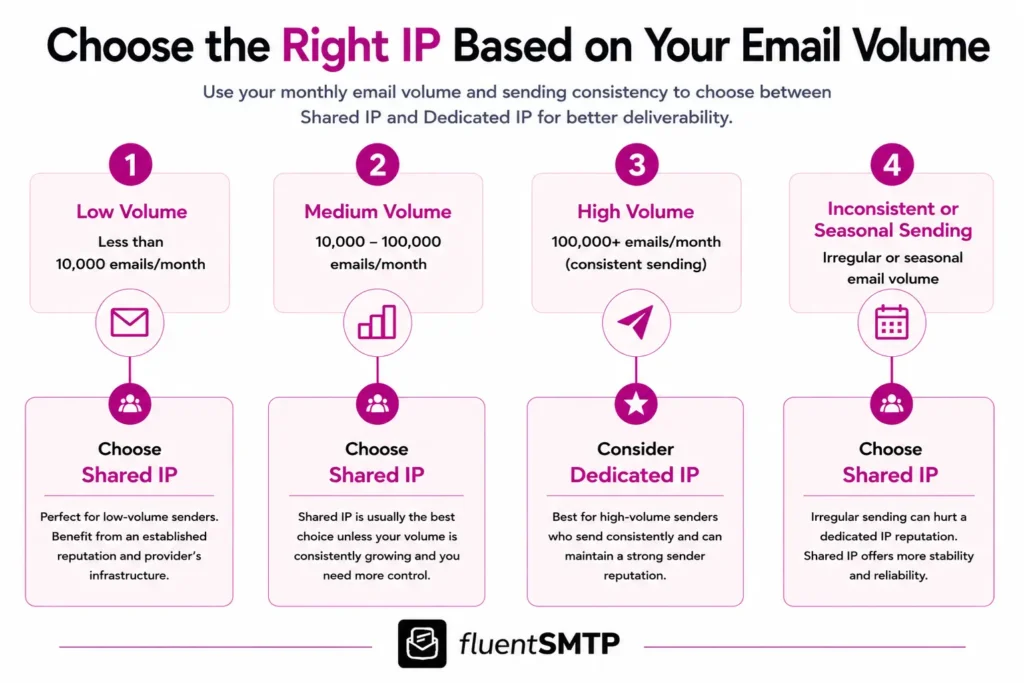
The best choice between a shared IP and a dedicated IP depends on how many emails you send and how consistently you send them. A dedicated IP isn’t automatically better; it only becomes beneficial when you send large volumes of emails regularly and can maintain a strong sender reputation. For most businesses, especially those just starting out, a shared IP is often the smarter option.
| Your Situation | Recommended Choice |
| Blogger or personal website | Shared IP |
| Small business | Shared IP |
| WooCommerce store | Shared IP |
| Membership or community website | Shared IP |
| Growing newsletter business | Shared IP (evaluate Dedicated later) |
| High-volume SaaS or enterprise | Dedicated IP |
Low Email Volume
If your website sends fewer than 10,000 emails per month, a shared sending IP is usually the best choice. It benefits from an established reputation maintained by the email provider, so you don’t have to build trust from scratch.
Recommendation: Shared IP
Medium Email Volume
Businesses sending 10,000–100,000 emails per month can still perform very well on a high-quality shared IP. Unless your sending volume is consistent and continues to grow, switching to a dedicated IP may provide little benefit.
Recommendation: Usually Shared IP
High Email Volume
If you consistently send 100,000+ emails per month, a dedicated IP becomes worth considering. Since your business exclusively controls the IP, your reputation depends entirely on your own sending practices, giving you greater control and scalability.
Recommendation: Dedicated IP
Remember: Consistency Matters More Than Volume
Sending 150,000 emails once every few months is generally less effective than sending smaller volumes on a consistent schedule. Mailbox providers value predictable sending patterns, so maintaining good email practices is more important than simply choosing a dedicated IP.
Best Practices for Better Email Deliverability
Whether you choose a shared IP or a dedicated IP, your sending practices have a much bigger impact on deliverability than the IP type itself. Follow these best practices to improve your chances of landing in the inbox.
Authenticate Your Domain
Set up SPF, DKIM, and DMARC to verify that your emails are legitimate. Proper authentication builds trust with mailbox providers and helps prevent spoofing.
Keep Your Email List Clean
Avoid sending emails to inactive or invalid addresses. Regularly remove bounced emails, honor unsubscribe requests, and never purchase email lists. A smaller engaged audience is far more valuable than a large inactive one.
Send Emails Consistently
Mailbox providers prefer predictable sending patterns. Sudden spikes in email volume can negatively impact your sender reputation, especially on a dedicated IP.
Focus on Engagement
High open rates, clicks, and replies are positive signals. Spam complaints, high bounce rates, and low engagement can hurt deliverability regardless of the IP type you use.
Build a Reliable Email Sending Setup with FluentSMTP
Choosing the right IP is only one part of a successful email strategy. Your WordPress website also needs a reliable way to send emails.
Instead of relying on the default PHP mail function, FluentSMTP lets you connect your website with trusted email providers such as Amazon SES, SendGrid, Mailgun, Postmark, Brevo, Gmail, and Microsoft 365. This helps ensure important emails like password resets, order confirmations, booking notifications, and contact form messages are delivered more reliably.
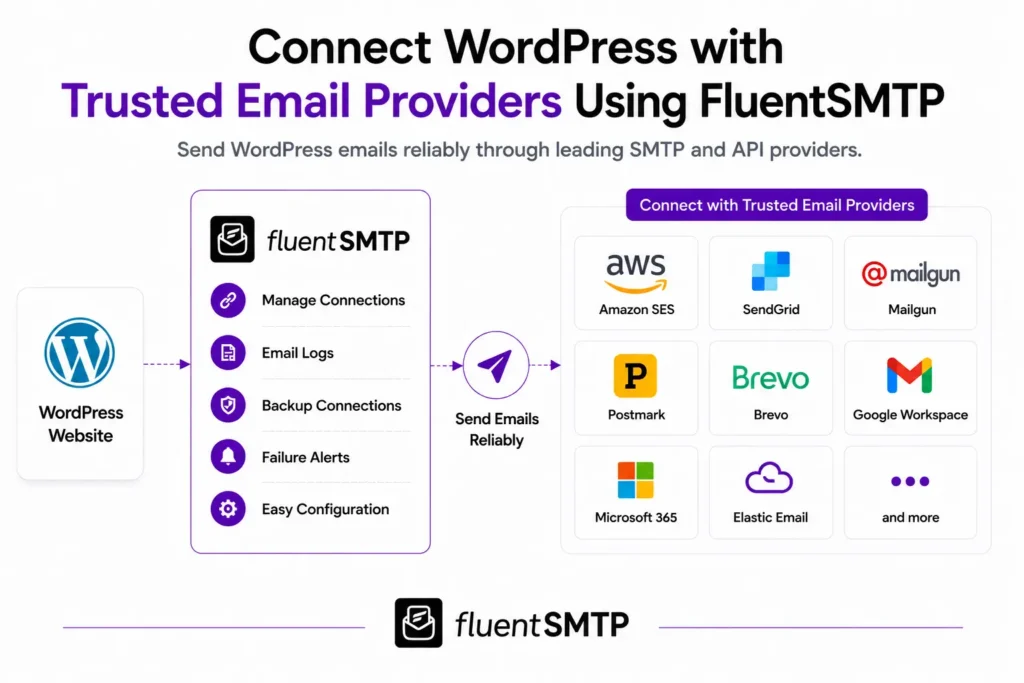
FluentSMTP also offers features that make email management easier, including:
- Multiple mailer support
- Backup connections for improved reliability
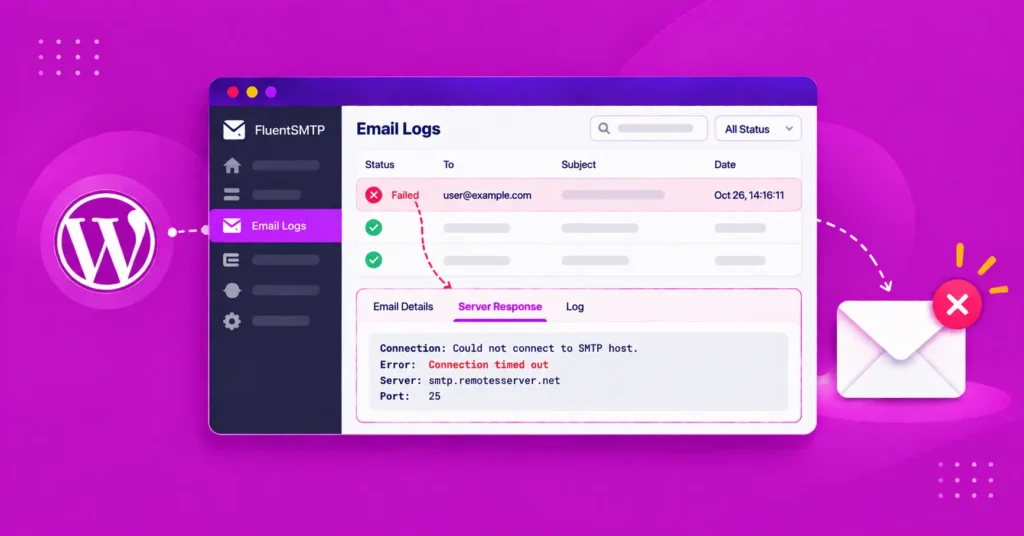
- Email logs for troubleshooting
- Simple SMTP configuration
- Easy integration with leading email providers
Whether your provider uses a shared sending IP or offers a dedicated IP option, FluentSMTP helps your WordPress site take advantage of that infrastructure through a reliable SMTP connection.
Check this complete guide on email settings and SMTP configuration
Download FluentSMTP
(100% Free)
Get the most powerful SMTP plugin for free and hit the recipient’s inbox with your WordPress emails

Conclusion
When comparing shared IP vs dedicated IP, there isn’t a one-size-fits-all answer. The right choice depends on your email volume, sending consistency, and long-term business needs.
If you’re a blogger, small business, WooCommerce store, or membership website, a shared IP is often the smartest and most cost-effective solution. It provides access to an established sending reputation without the responsibility of managing your own IP.
If your organization consistently sends large volumes of emails and requires complete control over sender reputation, a dedicated IP can offer greater flexibility and scalability. However, it also requires proper maintenance and responsible sending practices.
Frequently Asked Questions

Aminul Islam
Hi! Nice to meet you. I’m a guy who loves to explore, learn, and share knowledge. I spend most of my time catching up with marketing tips & tricks. When I’m not busy with any of these, you’ll find me with a book, exploring the city, or playing my favorite games.
Table of Content
Subscribe To Get
WordPress Guides, Tips, and Tutorials






Add your first comment to this post